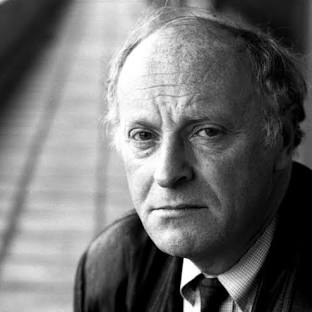
Joseph Brodsky (1940-96) came to the United States in 1972,an involuntary exile from the Soviet Union. He received the Nobel Prize in Literature in 1987 and served as Poet Laureate of the United States in 1991 and 1992.
His books include Less Than One, On Grief and Reason, Selected Poems, and many others.
– I don’t think that Brodsky had any specifically negative attitude towards Nabokov. This is another myth. Naturally, every poet is a jealous creature, especially towards someone else’s success. And, naturally, contemporaries rarely appreciate each other. But, I repeat, there was no trace of antagonism between them. Another thing is that Brodsky did not consider Nabokov an outstanding poet, but he read his prose quite attentively back in the Soviet Union. There are even certain traces of reading Nabokov’s prose in Brodsky’s early poems, before his departure. For example, in “Dedicated to Yalta”. And in 1979, Brodsky translated several Russian poems by Nabokov into English at the request of an American magazine. Brodsky and Nabokov had many mutual friends who tried more than once to bring them together. And yet Brodsky neglected this opportunity. Why? One can only guess. Either he didn’t want to go to the homage, or he thought he would feel awkward in the presence of the master. As for Nabokov, he was familiar with Brodsky’s work in absentia through their common publishers, the Proffers. It should be noted that he didn’t particularly like Brodsky’s poems (he considered them verbose), although Nabokov had only read Brodsky’s early works, from the 1965 book, to the publication of which the author, as is known, had little to do. Although I don’t think that Nabokov would have liked the mature Brodsky either: a completely different temperament, a different sense of the world. Nevertheless, Nabokov noted the extraordinary talent of the young poet and, of course, was outraged by the tyranny of the Soviet authorities: Joseph was then in exile in Norinsk. There was a rather funny story when in the mid-60s Nabokov gave Brodsky jeans with Karl Proffer – a real help! – and Proffer brought them, and Joseph wore them.
– Brodsky’s almost manic passion for travel is well known. In your opinion, what was it connected with, Brodsky’s Europeanism, his innate need to absorb everything and everyone like a sponge, or was it the lifestyle of the Nobel laureate that dictated it? Or maybe it was the Jewish craving for travel that spoke in him?
– Europeanism has nothing to do with it – most likely the second and third. I don’t know if the Jewish desire to wander exists at the genetic level. Perhaps, the greed for the world, the desire to see everything with one’s own eyes, to visit everywhere is a distinctive feature of the Jewish people, but greed for the world is, in principle, a normal feature of any great poet. Even before his emigration, Brodsky traveled around a significant part of Russia with geological expeditions, traveled just like that with friends, went to Yakutia, was in Samarkand, in Altai... Perhaps, this was connected, like with any Soviet person, with the “complex of longing for a foreign land”. They don’t let you in, and that’s why you pine. Then, when Brodsky got to the West, he naturally wanted to fly around, to see the whole world... A common Jewish reproach: why, they say, did Joseph never visit the Promised Land during his numerous tours. He wrote so much, relying on the Holy Scripture, and here... Well, at least just look at the stones, touch them, breathe in the air... Joseph himself answered this question quite simply, referring to the fact that from the moment he left for the West, he taught endlessly, and was on the road only during vacations. In the winter - Venice, he was incredibly drawn there, and he spent every winter in Venice, and in the summer - he was simply afraid to go to Israel because of the heat. In the summer, Joseph always went to the North. He went to Sweden not because of some beauty there, but simply because these places reminded him of his native Baltic city, and there he, a heart patient, really breathed easily and freely. As for traveling in general, I think that every person who has received a certain degree of material freedom strives to compensate for what he was deprived of in childhood. I noticed that the emigrant brothers, who grew up on sausages for two and twenty and sprats in tomato sauce, when they found themselves in the West, became refined gourmets.
THE IMAGE OF THE POET AND THE ACTUAL SPHERE OF THE SPEAKER
Leonid Katsis, literary scholar
– You can argue until you are hoarse about the Jewishness and non-Jewishness of Russian writers and poets, Jews by origin, who made a significant contribution to the literature of the 20th century. Tell me, as a specialist, is there any research need, any literary sense in straining your vocal cords on this matter, or is it more connected with the desire to pander to national feelings?
– When a question of this nature is asked about Russian-Jewish culture, it becomes meaningless until the answer is given: the origins are not in Russia. Back in the early 1920s, a book entitled “Modern German Jewish Writers” was published in Germany under the editorship of Gustav Krojanker and Martin Buber, which contained more than twenty names of Jews who wrote in German. From the extreme Jewishness of Elsa Lasker-Schüler, specific aspects of the works of Arnold and Stefan Zweig to German writers who were already unknown to anyone, who denied their Jewish origin and called themselves almost “Siegfrieds”. The problem of this binational, non-Jewish-speaking Jewish culture, the desire to interact with the surrounding culture to a greater or lesser extent, came to Russia from Germany. (This became obvious to me when I studied Mandelstam’s Jewish motifs). If we talk about American-Anglo-Jewish culture, when Jews from Yiddish, Hebrew families in the second generation began to speak English, we should also admit that they created a huge culture. Our problem is that in its pure form in Russia there was neither an American situation nor a German one. We did not have a hundred and fifty years of German cultural development of Jews and such a consistent development as it was in America. All we can talk about is the appearance in Russia in the 60s of the 19th century of the first Jewish magazines. This was connected with the assimilation processes that were carried out from above. Therefore, if we consider the issue at an early stage, it will be one thing, and completely different if we talk about, say, how and why Mandelstam based his works on Jewish subtexts. The question is more complex, which I touch upon in reviews devoted to the recently published correspondence of Pasternak, the question of another kind of experience, which came from Buber: the rejection of one's Jewishness and the complexes associated with it. The experience that the messianic expectations of the Christianizing Pasternak were not realized in the form in which he wished. Another thing is that many works, not necessarily Jewish in Russian culture, or Jews in Russian literature, these words must be distinguished, come to us in the form in which they come. And we cannot guarantee that Dante or Goethe in Russian culture have any relation to Dante or Goethe in Italian and German. Returning to Mandelstam: in his case, no one understood this Russian-Jewish culture to see it, and this is a very high-level European Jewish culture in the Russian language. Previously, the point of view was put forward that Mandelstam's prose had no significance at all, that it was where the miasma that interfered with his poetic creativity flowed in. But then we would have to throw out two thirds of what he wrote. If we are not interested in this and we read his works as abstract monads - please, but there is always a need for research, because the moment will come when they will ask why two thirds of the poet's works suddenly turned out to be unnecessary, and, for example,Should Tolstoy or Pushkin be served academically to the laundry receipts? This should not be, and the texts will have to be studied in the most thorough manner. Otherwise, what is happening now will happen: in that unbecoming place that Russian-Jewish literature occupies in Russian culture, philosophical, economic, social, sexual and all sorts of other questions will be clarified in a jumble. Until the division that, for example, has long existed in Europe, occurs, there is no point in talking about the problem of satisfying national feelings.
– What role did the innate and inescapable Old Testament worldview play in Brodsky’s work? Wasn’t it precisely the main component of Joseph Alexandrovich’s genius?
– We know that Brodsky’s early works included poems on biblical and Jewish themes. If you open his collected works, you can find, for example, an explanation of who the Lamedvavniks were. Why did he need these words, why did he review Philip Roth’s novels? The fact that Brodsky wrote poems about biblical heroes and prophets already speaks of where the poet arose from. Of course, for that time, this was a rather dissident occupation. The thing is that when we talk about the “excessiveness” or “inevitability” of Jewish feeling, it is usually some kind of metaphysics, but let’s pay attention to such a simple thing: who was the leader of the poetry of the mid-50s, when Brodsky was growing up? First of all, from the official poets – Selvinsky, Bagritsky, Slutsky... Only a couple of years ago we learned that the author of humorous poems about Motka Molkhamuves or about the Karaite sage, Selvinsky, for many years wrote a play about False Dmitry II as a Jewish Kabbalist. There is such a legend. So, this man, who created the Soviet epic, who wrote during the war about the Crimean ditches where Jews were killed, and at the same time – this play! Such “in abundance – in abundance”... In the same way, Brodsky could have stopped writing about this, which does not change the matter. Against this background, his Jewishness does not have a metaphysical character, and the fact that in his time he was repeatedly asked the “Jewish” question and he answered it very differently is significant. One of the main problems in considering your question is that a Russian-Jewish writer is required to remain at the level of the first stage of Russian-Jewish literature, and more advanced ones are not allowed into this country! Nothing of the sort: in the 20th century they had fully mastered all the surrounding techniques, and only the writer's point of view on the Jews and himself is important. Sometimes this is a view from the outside, sometimes an orientation towards biblical Jewish images. And if we look at the Complete Works of Joseph Brodsky, we will see that the Jewish theme exists for him, he periodically reviews something, notes something. The only time I saw him, in 1991 at the Mandelstam Conference in London, he specifically spoke about Mandelstam's Judeo-Christian poetry. In the modern world, when you follow Pasternak or someone else from a similar level of poets, we cannot talk about a purely Jewish attitude. Just as it is impossible to say: Judaism believes, and Brodsky thinks. Well, there is no person from a closed shtetl, a yeshiva, who would reproduce precisely this paradigm. Perhaps today, in our current situation, such literature may appear: purely religious, for internal use. Especially since it has not gone anywhere in America. But Brodsky's choice here is a completely normal choice for a 20th century Jew.
- Joseph Brodsky is one of the few poets who are completely true to themselves, although in Solomon Volkov's "Dialogues with Brodsky" he sometimes tries on the mask of a cynic and a conformist. It seems to me that in him lived that very "no" which, according to Ehrenburg, was an eternal Jewish trait. Don't you think that Brodsky's poetry is also charged to a significant extent with this "no"?
– Some of the sixties generation find it impossible to imagine, for example, that Mandelstam’s “Ode” to Stalin is not a cynical and not avant-garde work. And Brodsky, in a conversation with me at a conference dedicated to Osip Mandelstam, claimed that it was one of Mandelstam’s most stunning, brilliant works, and he argued precisely from the point of view of the assumption you expressed. In 1991, my article dedicated to the “Ode” was published, although the editors at the time tried to persuade me not to begin my biography with this article: “If you have articles about “The Unknown Soldier,” they said, “bring them, we’ll publish them.” I refused, because I was interested in this pairing. And suddenly, right then, “Continent” published “Dialogues with Brodsky” by Solomon Volkov with those very words of Brodsky, which ended up only in the notes of my article, because it was impossible to insert them anywhere else. The situation was quite peculiar then. When he was awarded the Nobel Prize, no one particularly welcomed it in our newspapers, they said that the prize was for sale, and something like that, and some of the patriotic publicists of that time made a career out of it. So a group of intellectuals decided to modestly celebrate Brodsky’s prize: they gathered once in the Pushkin library, another time in a café opposite the Nauka publishing house. And, you know, it was interesting that, with the exception of one or two people who had managed to visit New York at that time and meet Brodsky, everyone spoke of him in the past tense. In linguistics, there is such a concept as “the speaker’s actual sphere,” and even then Brodsky was not included in the speaker’s actual sphere as a reality, but only as an image. It was an amazing feeling. Those who are discussing this topic today would do well to understand: the Nobel Prize was awarded to a person who is inaccessible to us, even if we have heard his speeches and met him at conferences. Ultimately, all we have from him, outside of time and space, are the seven volumes of his collected works and the unpublished archive, such as it is today.
- Why did Brodsky, possessing an Old Testament worldview, choose as his guide not a medieval Jewish poet, say, Emmanuel of Rome, not Philip Sidney or Ben Johnson, but John Donne? What was it, the fashion of that time for Hemingway and his famous novel, some kind of inexplicable connection due to its irrationality, sending down the only opportunity to separate oneself from everyone, taking the direction of the bell that tolls for you?..
– I think the problem was that Brodsky was not an American poet with a university education, with the opportunity to “walk” through the most luxurious libraries: sometimes, you know, such a fateful event in life – the first non-random book you read. It is important that it was this book that allowed Brodsky to build his own uniquely original world. To build it in Russian, with previously unfamiliar metaphysics, with strange imagery. It is important that this book allowed him to connect in the shortest possible way with Blake, Eliot, Auden... Let’s not forget that, in fact, Brodsky is a Petersburg poet “in nature”. He needed to find himself in an incredibly dense environment, which (we can clearly see this today) is becoming more and more dense. And add to this the fact that, generally speaking, Akhmatova lived nearby, and it was necessary not to fall under the influence of the classic and her difficult environment... And what is the story with “Doctor Zhivago” worth? Brodsky could not help but wonder why, for example, Selvinsky and Shklovsky condemned Pasternak. An extremely difficult question. It was at that time that Selvinsky's influence on Brodsky ceased. And how can one not recall "The Great War", recently published in "Zvezda", a work that shows us the search within the framework of that very epic tradition to which the poet aspired in the dense Petersburg environment, finding his breath in precisely this meter, verse, partly old-fashioned, European... Brodsky is a metaphysical poet! His place in Russian poetry is excellent in this way. Not in prosody, nor in pronunciation, nor in the very way of presenting the verse, but in the metaphysical and epic mood. And the choice of technique is a question of poetic talent. Similar meters can be found in Russian pre-war constructivist poetry. Brodsky was perfectly aware of his poetic origins and the fact that his position in Russian poetry was exceptionally principled and original. This allowed him to synthesize the experience of the most diverse poets, the same Selvinsky, Pasternak, Slutsky with European metaphysicians.
POET OF HIS CIVILIZATION
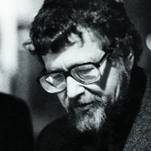
Lev Losev, poet, translator, literary scholar
– In his essay “Bow to the Shadow,” Brodsky explains the reason for switching to English: “My only aspiration then, as now, was to find myself in closer proximity to the man I considered the greatest mind of the 20th century: W. H. Auden.” What follows, in my opinion, is a statement of absolutely stunning depth, which can and should be considered beyond the poetic framework: “This is the most that can be done for someone who is better than us.” Brodsky generally considers this kind of action to be “the essence of all civilizations.” Tell me, why does no one today continue in the spirit of Brodsky himself, I am not taking into account, of course, the avalanche of epigonism that fell upon us in the 80s and 90s? Doesn’t this indicate the end of our civilization?
– At the risk of sounding pedantic, I would like to make a few clarifications. Firstly, Brodsky did not switch to English. All of his main poetic work remained in Russian until the end. Secondly, what do you mean by “our civilization”? The Judeo-Christian civilization of the last twenty centuries? The civilization of post-Petrine Russia? The era of modernism, industrial society? This latter, of course, came to an end, and Brodsky had a heightened intuition of this end (post aetatem nostram). It was precisely because he possessed such intuitions, a prophetic gift, and the ability to get to the very essence of everything, as another great modernist poet said, that Brodsky was the poet of his civilization. This is essentially the romantic type of genius, and Pushkin, Wordsworth, Rilke, Mandelstam, and Auden belong to it, in fact, all those whom we consider great poets of the last two centuries. I, alas, do not belong to this category, I am not a “herald of the covenants of the future”, and I do not have a clear vision of what is happening, what will happen. I only have rather vague feelings, quite possibly erroneous. If they interest you, then yes, it seems to me that something has irreversibly changed, that in the paradigm of the new culture there is no place for a poet-genius, but there is a certain dissolution, a blurring of poetry in the cultural environment. I think so because I do not see great poets, but many, many good poems appear, significantly more than thirty or forty years ago.
- Nabokov and Brodsky. Both from St. Petersburg, both represent the 20th century, both are classics of two world literatures, both glorified their native city, were forced to leave it and both returned to their homeland only with their works, America stood behind both, despite the fact that both felt like Europeans... How do these two grandiose figures in world and domestic literary studies connect today, and do they connect at all?
– The only work on this topic that I know of is a very useful dissertation by the young American literary scholar Jennifer Day, where Nabokov and Brodsky are considered as St. Petersburg cultural heroes. I wrote a little about the relationship between Nabokov and Brodsky in the latter’s literary biography, and I don’t want to repeat myself.
– You wrote a wonderful book about Brodsky in the “ZhZL” series, in which, in addition to honest research work, I was also “hooked” by the writer’s high-quality caution, behind which you discover a lot: a poet, a friend, a decent person... Tell me, will you write more about Brodsky?
– Thank you for your kind words. Actually, my small book was a relatively accidental offshoot of another, larger-scale work. For almost ten years I have been compiling comments for a collection of Brodsky’s poems in the “New Library of the Poet” series. At the final stage of this work, I sat down to write a preface, a critical and biographical essay. The essay has grown unnoticed. The comments are finally finished and, I hope, will be published at the end of this year or the beginning of next year. Remember, Chekhov made fun of the professor who believed that it was not Shakespeare that was important, but the comments on Shakespeare. I have not yet reached such a professorship, but I hope that an attentive reader will find some of my comments interesting. In addition, for several years now I have been jotting down various recollections in fits and starts. Memographomania is an age-related affliction. The section of recollections about Brodsky probably already has more than a hundred pages (I didn’t count).
– Martin Buber said: “The acquisition of the integrity of the soul is the most ancient inner experience of the Jew, an inner experience that with all the power of Asian genius manifested itself in the personal lives of great Jews in whom deep Judaism lived.” Tell me, in your opinion, do the words of Martin Buber have any bearing on the life and fate of Joseph Brodsky?
– I do not understand Buber’s statement as a whole or in parts. I do not know what “integrity of the soul” is, what “Asian genius” is, how it differs from “European genius” or Australian. I would say that “deep Judaism” is also unclear to me, but here at least Brodsky’s statement comes to mind that he feels himself a Jew because he has a sense of the Old Testament God as a judge. Brodsky actually said this: “God is violence.” Such an unusual sense of Jewish self-identification did not prevent Brodsky from also considering himself a “correspondence Christian.” I do not see a contradiction here, since in the first case we are talking about religious identification, and in the second about cultural identification. As a side note, I can add that many years ago, when I read “I and You” and thought about the similarity of Buber’s and Bakhtin’s ideas, I asked Brodsky if he had read these authors. He said that he had not read Buber, but had looked through Bakhtin’s “The Poetics of Dostoevsky,” and added: “I liked the quotes.”
Charles Baudelaire said that priests, warriors and poets are closest to God. For them more than for anyone else, the next world "ripens" on this. For one who has "flown around" God, His unity is obvious, is this not the source of Brodsky's non-confessionalism? As for his Jewishness, which he did not renounce, I think Leonid Katsis is right, the poet Joseph Brodsky should be studied not only in the context of Russian, but also Russian-Jewish culture, studied without satisfying national feelings, so as not to slide into everyday, low-grade situations.